
The books I read in 2025
Finished 10; could have read more if it wasn't for Dostoevsky's The Idiot.

House of the Spirits (1982) by Isabel Allende
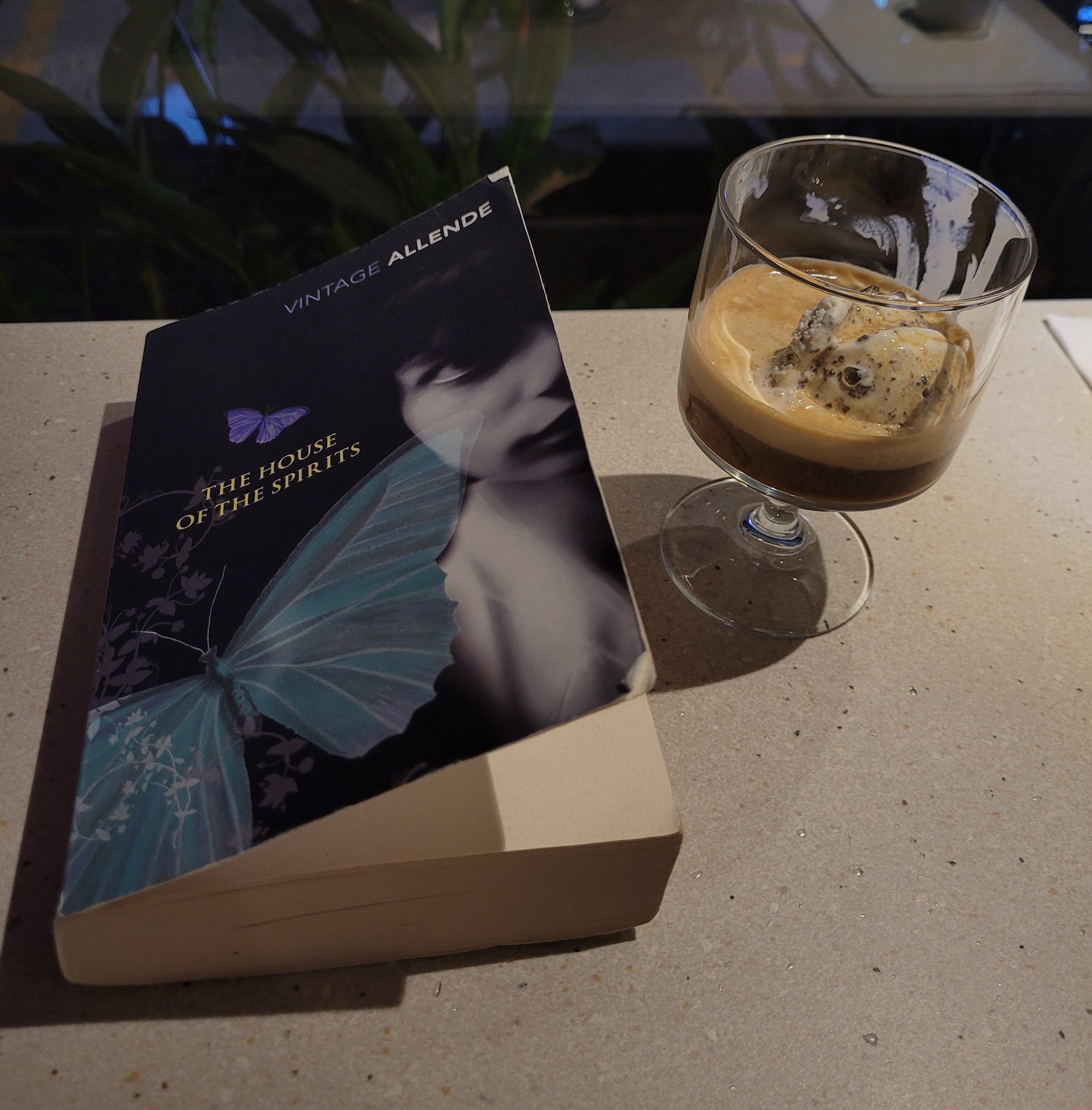
I read its story as microcosmic for the history of ethnic groups born, or altered, from multi-generational bastardy. People (particularly from historically oppressed groups who are doing okay right now) forget that so many aspects of their identity—skin tone, religion, language—come from top-down inter- class, caste, race (etc. etc.) sexual violence, so I found it a relevant read and a good reminder.
The book has also birthed in me a fascination for Leninism. It has made me understand why a post-revolution proletariat dictatorship might be necessary to keep a bourgeois tyranny in check and ensure that socialist reforms—like uniform land ownership—are made permanent before transitioning to a Marxist democracy. Have already added Comrade Lenin’s works to my book list.
The Most Beautiful Woman in Town & Other Stories (1983) by Charles Bukowski
I was skeptical if Bukowski could pull off sci-fi and fantasy stories, but within his crude form and gritty, grounded settings, they worked surprisingly well. Witches, sex robots, and brain re-programming machines existing alongside unemployment cheques, enlarged prostates, and bland turkey made these stories effortlessly absurd. I urge people who lap up goofy nonsense like Everything Everywhere All At Once (2022) or Death Stranding (2020) to read Bukowski to understand what good absurdism is actually like.
I also liked how the stories place you in the shoes of incredibly reprehensible characters. Bukowski forces you to see yourself in them, making their flaws, insecurities, and contradictions uncomfortably relatable. I can see how such stories can be disconcerting to some, but their point is delivered well: how unchecked fear, loneliness, resentment, and desperation can twist even the best of us.
There is one short story (”Copulating Mermaids of Venice”) where he takes the body defilement a bit too far, however.
The Complete Poetry of Edgar Allan Poe (1876)
I know someone whose favorite poet was Ovid until they discovered Poe, which is understandable if you solely consider his long-form poems: “The Raven”, “Tamerlane”, and “Al Aaraaf”. With their wordplay, internal and external rhymes, and assonances, their verses yearn to be recited—even sung.
That said, the aforementioned poetic devices combined with his use of archaic language make his shorter, one-page poems feel annoyingly anachronistic and contrived. Most of the poems in this compilation are of this sort, so overall, I’m not too impressed with this book.
Flourish: Design Paradigms for Our Planetary Emergency (2021) by Sarah Ichioka & Michael Pawlyn
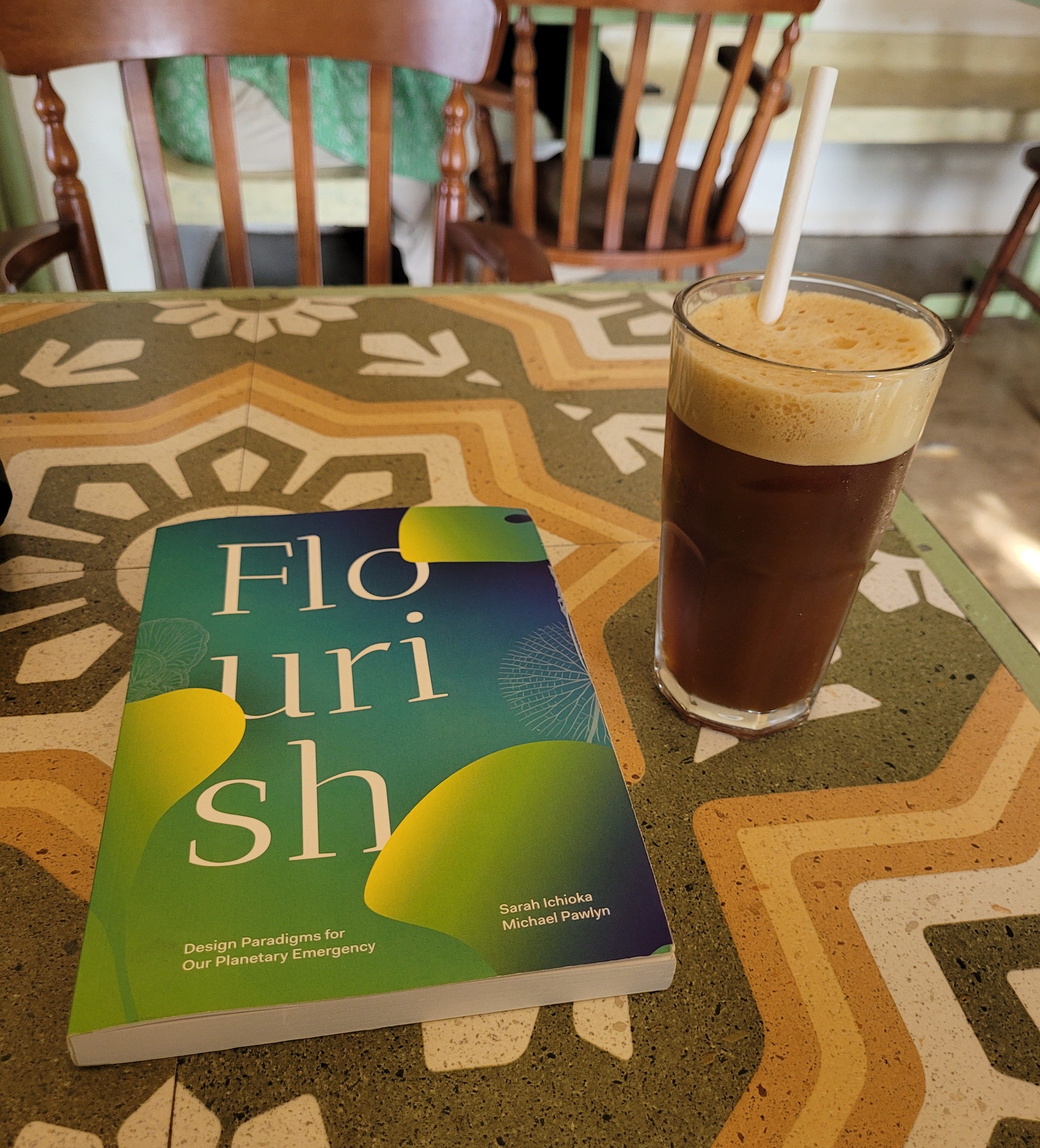
This functions more like a manifesto and call to action than a guide or toolkit on how engineers, architects, and other professionals can work sustainably in the built environment industry.
I appreciated the environmental research findings that articulate the disastrous effects of climate change and how most frameworks that we use, like LEEDs, do not accurately capture the total carbon emissions associated with a project. I also loved learning about the social findings, such as how only 3-4% of a population is required for massive paradigm shifts to happen. However, the book seemed like it would be more technical; it was not, so that disappointed me quite a bit.
The Interpretation of Dreams (1899) by Sigmund Freud
It’s like reading The Rig Veda to learn cosmology. Total quackery now that we have scientific methods to look into the brain and mind.
I normally don’t bother with product-of-their-time books, but someone gave this to me with great enthusiasm and I wanted to be fair to them, so here we are.
The Idiot (1869) by Fyodor Dostoevsky
Notes from Underground (1864) seemed like a hyper-conscious descent into madness initially, but it just turned out to be incoherent incel rambling.
Had a similar experience with this one: seemed like a falling upwards by playing an idiot story, similar to Greg and Tom's from Succession (2018 - 2023), but Myshkin really is just a pathetic pity-party self-insert idiot.
The form is also annoying: too much exposition.
The Great Gatsby (1925) by F. Scott Fitzgerald
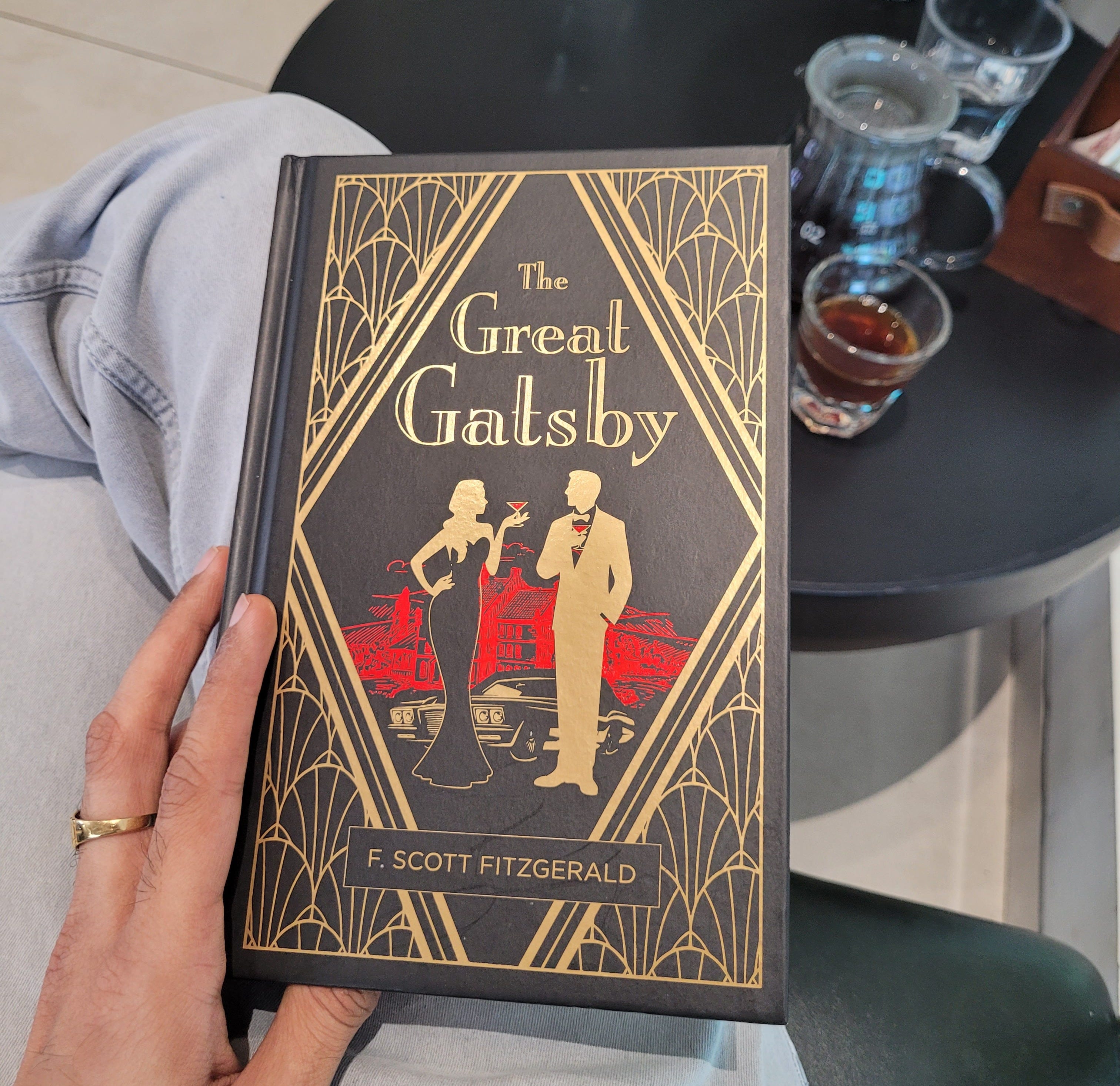
An incredible Marxist Trojan horse! Gatsby’s desire for Daisy and to become like the aristocrats is a metaphor for the proletarian aspiration of becoming bourgeois. The bourgeois parasites leech off this dream, wreaking havoc as they please and then retreating to their mansions while the working class cleans up their mess, hoping for a seat at their table. The book warns that while sweeping bourgeois debris, you might slip, fall, and break your neck - as Gatsby did.
Hope: The Autobiography (2025) by Pope Francis
The autobiography, as a form, is and always has been safe and sterile. This one is no different.
The Rig Veda (1200 BCE)
A good set of paganistic poems; i.e, poems about nature and other tangible/palpable entities.
It makes occasional calls for pre-Reformation Protestantism-esque indulgences towards priests, so I knocked a few points off for that in my mental scorecard.
Suit (2022) by Samarth
Samarth’s art is so expressive, visceral, and dynamic.
The story asks some very pertinent questions. Do all forms of labor actually have inherent dignity? Why is cleaning up in India still a chore of the lower castes? Why don’t upper castes clean the toilets they shit in? Does financial mobility necessarily come with social mobility?
The cycle of casteism is continued as the story ends. I wish it had done something else with it—though I am unsure what.
Bird Business: Illustrated Peeks into the Daily Lives of Indian Birds (2021) by Rohan Chakravarthy
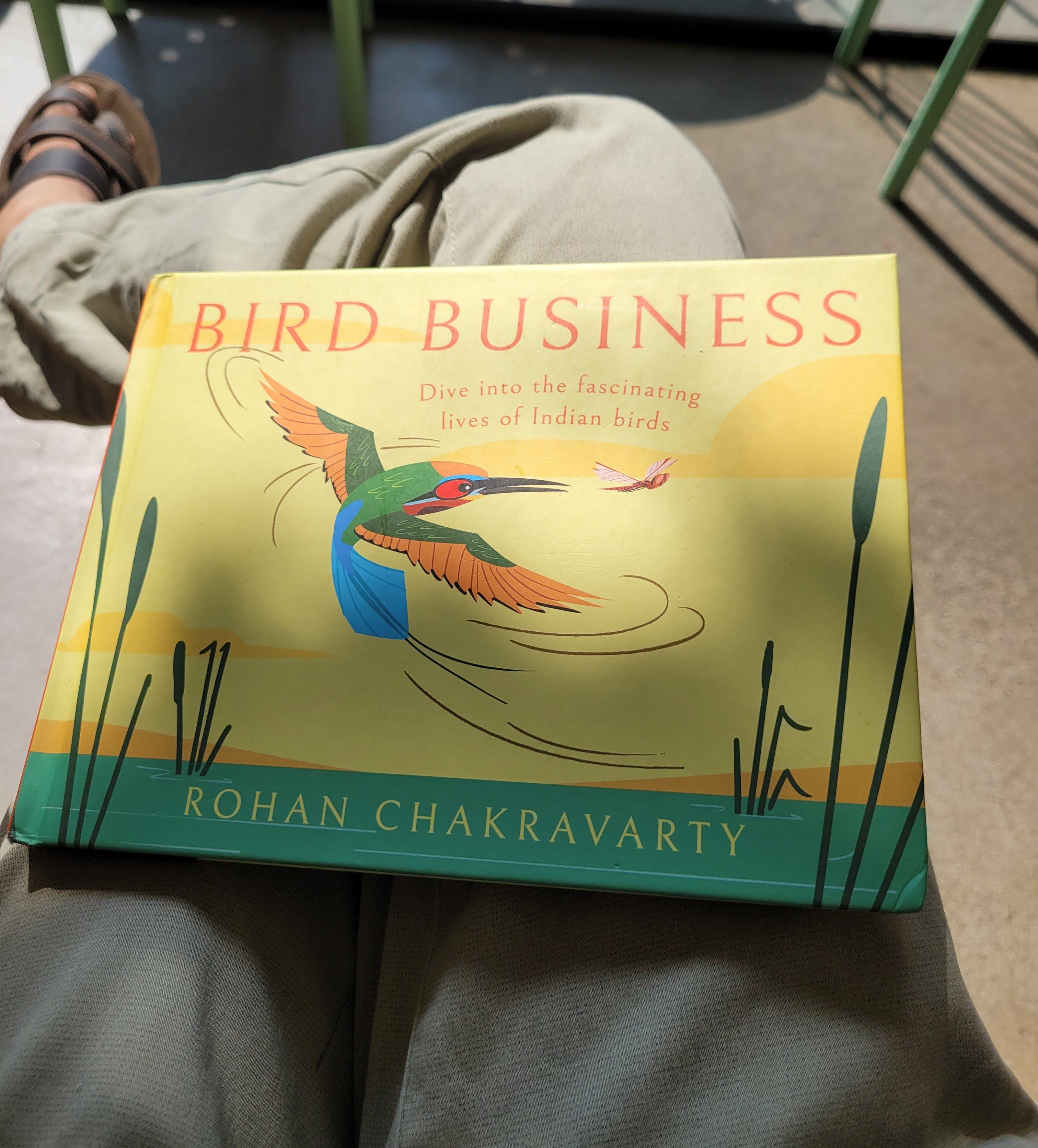
The illustrations are so good that I always ended up animating them in my head—as I used to do when I was a child.
It is also a fun piece of bestiary to carry around when you want to know the most fascinating trait of a particular species—if the topic of birds ever comes up.